Amputation Rehabilitation in Lafayette, Louisiana

Physician-led inpatient rehabilitation for rebuilding strength, balance, and everyday independence after limb loss.

Services

Relearning an Ordinary Day after Limb Loss

After an amputation, parts of the day that never took any thought have to be learned again: getting out of bed, standing at the sink, stepping into the shower, carrying a cup of coffee across the kitchen. Amputation rehabilitation is the therapy that follows limb loss, and it rebuilds those everyday movements one at a time, with a therapy team beside the patient for each of them.

At Acadiana Rehabilitation Hospital, that therapy happens during an inpatient rehabilitation stay. Patients live at the hospital while they recover, meet with their therapists every day, and remain under the care of a physician and nursing staff throughout. Our aim for every patient is the same: to help them become as independent as their diagnosis allows, and to treat them like family while we do it.

Recovery generally moves through two stages, with pre-prosthetic training before a prosthesis and post-prosthetic training once one is ready. Alongside that training, our team treats the wound care and pain management needs that tend to come up in the weeks after surgery, two of the many conditions we treat.

Who Needs Inpatient Amputation Rehabilitation?

Amputations follow different paths: some come after a serious injury, some after years of complications from diabetes or poor circulation, and some are scheduled weeks in advance, which gives a family time to prepare for amputation surgery and plan the recovery that follows. Whatever the path, inpatient rehabilitation fits patients who are medically stable enough to take part in therapy every day but still need nursing and physician care close by, and who can't yet manage safely at home. Amputation is also one of the conditions Medicare specifically recognizes for care in an inpatient rehabilitation facility.

Physical therapist wrapping an amputee\'s leg with medical wrapping

How Rehabilitation Differs by Amputation Type

Below Knee Amputation

With the knee still in place, our therapists focus on strengthening the muscles around it, balancing on one side, and moving safely between the bed, a chair, the toilet, and a car. After a below knee amputation, that foundation is what later supports standing with a prosthesis.

Above Knee Amputation

Losing the knee changes how a person stands, turns, and keeps their balance. Our therapists build the hip and trunk strength needed for standing, and they teach safe ways to get around in the weeks before a prosthesis is ready, when one is part of the plan.

Bilateral Amputation

When both legs are affected, as with a bilateral below knee amputation, nearly every transfer in a day changes. Our team builds the plan around upper body strength, wheelchair mobility, and the specific movements a patient will need inside their own home.

Upper Limb Amputation

The loss of a hand or an arm affects dressing, bathing, cooking, and writing far more than walking. Occupational therapy leads this plan, teaching one-handed methods for everyday tasks and building strength and coordination in the arm and hand that remain.

Pre-Prosthetic and Post-Prosthetic Training

A prosthetist makes and fits each prosthesis, and the timing of that fitting depends on how the limb heals. During a rehabilitation stay, our team provides the training on either side of it.

Before a Prosthesis

Before there's a prosthesis to wear, our therapists help patients care for the healing limb, keep the hip and knee from stiffening, build strength through the trunk, hips, and arms, and practice transfers and getting around without the limb. After a lower limb amputation, that preparation becomes the base for standing and walking.

With a Prosthesis

Once a prosthesis is ready, post-prosthetic training teaches a patient to put it on and take it off, stand in it, shift weight onto it, and take first steps. From there, patients practice walking a little further each session, followed by thresholds, curbs, and stairs. When a patient goes home before a prosthesis is ready, this stage comes later, and it starts from everything the stay built.

What Therapy Looks Like

Every patient's care follows one plan shared by a physician-led team, so the therapist practicing transfers in the morning and the therapist helping with dressing in the afternoon both know where things stand.

Physical Therapy

Physical therapists concentrate on balance, transfers, and getting from one place to another: moving from bed to chair, standing without help, using a walker or wheelchair safely, and covering more ground each day as strength returns.

Learn More

Occupational Therapy

Occupational therapists focus on the activities of daily living, from bathing and dressing to fixing a simple meal. After limb loss, patients practice familiar tasks from a different position: dressing while seated, reaching a cabinet from a wheelchair, getting in and out of the shower safely.

Learn More

Speech Therapy

Some patients arrive with swallowing or communication difficulties tied to the hospital stay or to the illness behind the amputation. When that happens, a speech-language pathologist joins the plan alongside the rest of the team.

Learn More

Nursing and Physician Care

A physician sees every patient daily, and nurses are on the floor around the clock. With that continuity, the care team can address a question about the healing limb, a change in pain, or a blood sugar reading on site rather than at the next appointment.

Learn More

How Admission Works

Admission to an inpatient rehabilitation hospital comes through the hospital where a patient is being treated now, rather than through an appointment line.

1. A Referral from the Treating Hospital

Most patients come to us straight from an acute care hospital, with the referral arranged by the case manager handling discharge. Ask that case manager to send a referral to Acadiana Rehabilitation Hospital, and give us a call as well. Asking early in the hospital stay gives everyone more time than asking on the day of discharge.

2. A Pre-Admission Assessment

Our team reviews the patient's diagnosis, current condition, and what they can do right now, together with the referring providers, to confirm that an inpatient stay is the right level of care.

3. Insurance Authorization

Inpatient rehabilitation requires authorization from the patient's insurer, and coverage depends on the plan and the clinical documentation. A first request is sometimes denied. When that happens, our team keeps applying rather than treating the first answer as final.

4. Admission and a First Plan

Once a patient arrives, the team sets goals with them and therapy begins. After the first team conference, the team can estimate the length of the stay, and the case manager keeps the patient and family updated on the expected discharge date and the care that will follow.
Begin Your Recovery

Frequently Asked Questions

About Amputation Rehabilitation

  • Rehabilitation can begin once the surgeon and medical team consider the patient stable enough to take part in therapy every day. For most patients, that means moving directly from the acute care hospital to Acadiana Rehabilitation Hospital at discharge rather than going home first.

  • Outpatient therapy is a series of appointments a patient travels to from home, while inpatient physical rehabilitation keeps the patient at the hospital, with nursing and physician care available at all hours. Inpatient care usually comes earlier in recovery, while getting through a day safely still takes help. When the inpatient stay ends, the case manager helps arrange any therapy a patient needs next.

  • Patients who are medically stable enough for daily therapy, still need hospital-level nursing and physician oversight, and can't yet manage safely at home. Whether a specific patient qualifies is decided through the pre-admission assessment with the referring providers.

  • Amputation is one of the conditions Medicare specifically recognizes for inpatient rehabilitation facilities. Coverage still depends on the patient's plan and requires authorization. If a first request is denied, our team continues to apply, and we help families with their insurance and Medicare coverage questions along the way.

  • A prosthetist makes and fits each prosthesis. Acadiana Rehabilitation Hospital provides the training around that fitting: preparing the body beforehand, then teaching a patient to stand, balance, and walk once the prosthesis is ready.

  • Therapy keeps the same goal: helping the patient become as independent as their diagnosis allows. In that case, our team centers the plan on safe transfers, wheelchair mobility, upper body strength, and the daily tasks the patient will handle at home.

  • Stays are short term and vary from patient to patient, based on progress toward the goals the team sets. After the first team conference, the team gives an estimate, and your case manager shares the expected discharge date and helps arrange any therapy needed after you leave.

  • Ask the case manager at the hospital where your family member is now. Case managers coordinate discharge and can send a referral to us directly. You can also call Acadiana Rehabilitation Hospital at (337) 330-2051 to talk through whether an inpatient stay fits.

  • Yes. Visiting hours run Monday through Friday from 4 to 8 pm, Saturday from noon to 8 pm, and Sunday from 8 am to 8 pm. Family support carries real weight after an amputation, so our care team helps families understand each step before discharge.

Contact Us

Recovering Close to Home in Lafayette

Acadiana Rehabilitation Hospital sits at 314 Youngsville Hwy, Lafayette, LA 70508, close to home for patients from communities across Acadiana. That closeness matters after an amputation. A patient practicing a front step is practicing for one particular house, and the family who lives there can visit on a weeknight, see how transfers are done, and help plan the move from hospital to home before discharge day arrives.

Amputation Rehabilitation

Talk with Acadiana Rehabilitation Hospital about Amputation Rehabilitation

Recovering after an amputation means relearning a great deal at once, and your family doesn't have to sort out the next step alone. If you or someone you love is facing an amputation or recovering from one in the hospital, call Acadiana Rehabilitation Hospital at (337) 330-2051 to find out whether inpatient amputation rehabilitation is the right next step. Ask the hospital's case manager to send us a referral, and our team will guide your family through each step of admission.

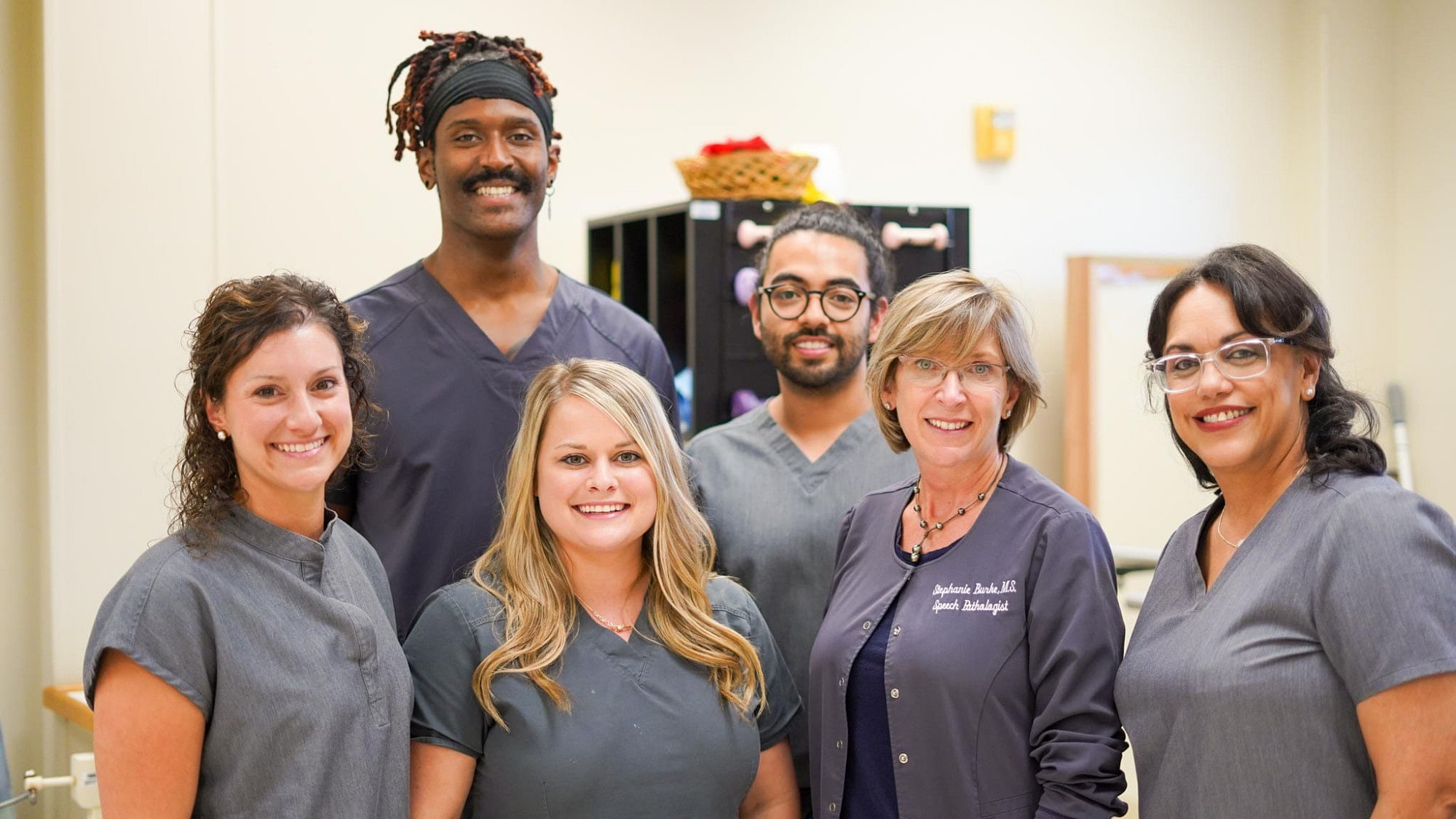
Our Physical therapists  in Lafayette, LA

Hear From Our Patients

Testimonials

I was so welcomed here, and I immediately felt like I was part of a family. My experience was perfect, it couldn’t have been better. Long live Acadiana Rehab, it helped me more than I can say!
Pamela
“I never thought I would be able to walk again. With the help of the wonderful therapists here and the entire staff, who are amazing, I am where I am today. It’s an amazing place, I feel like family here. I am truly thankful for everybody here who has helped me and been so nice and generous.”
Theresa
“I was referred here by a nurse; he highly recommended the place because his grandfather came here. I came here when I couldn’t walk, and now I can actually stand up, I walk, I’m talking. I’m really, really happy here.”
Lily
“I stayed there after my heart surgery–they did a great job for me.”
Clemens W.
“I can’t thank you guys enough for what you did for me for the 3 weeks I was there!”
Michael F.